
A Smarter, Stronger Foundation Solution
When your project demands strength, stability, and long-term performance, helical piles provide one of the most reliable foundation systems available today.
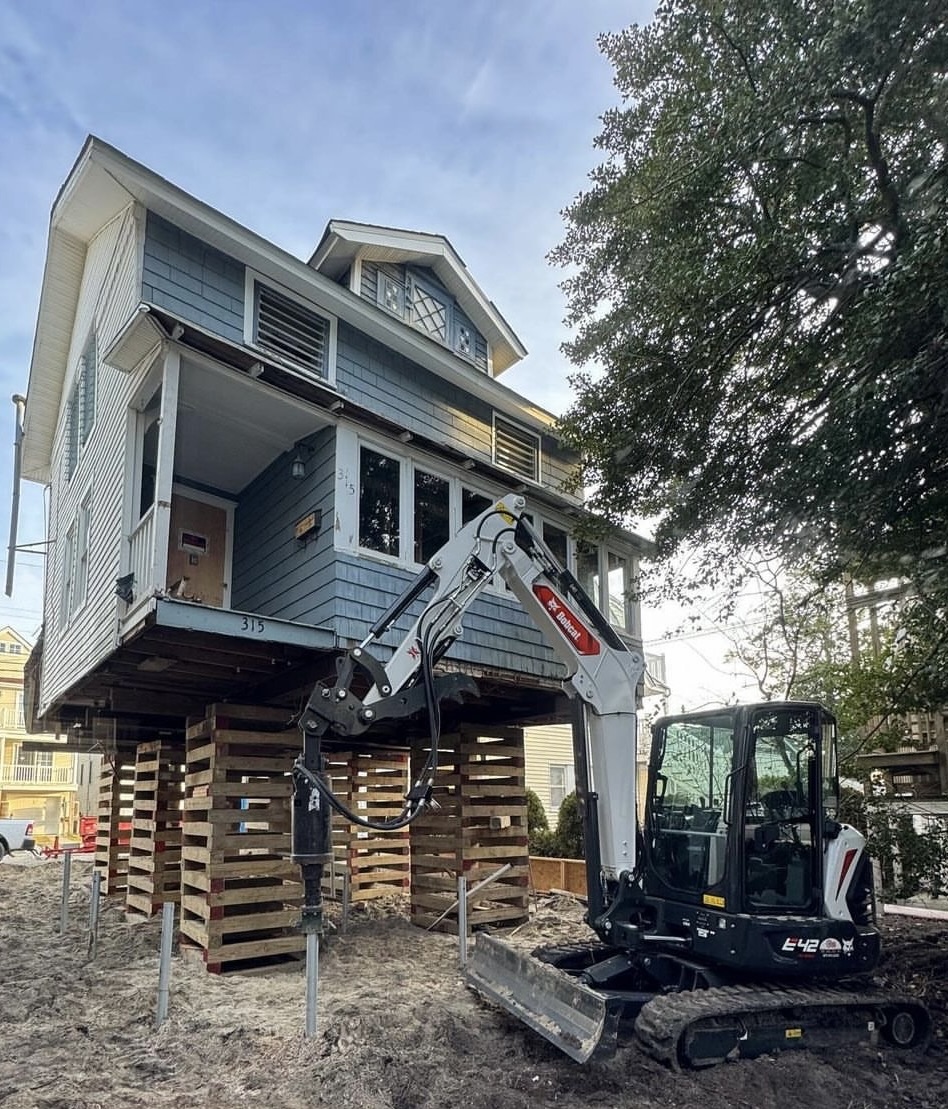
Whether you’re building a new home, adding an addition, repairing a failing foundation, or supporting a raised structure, helical piles offer a proven deep foundation solution that performs where traditional footings cannot.
What Are Helical Piles?
Helical piles (sometimes called screw piles or helical piers) are steel foundation elements that are mechanically advanced into the ground using hydraulic equipment.
They consist of:
- A high-strength steel shaft
- One or more helical (spiral-shaped) plates
- A connection bracket that transfers structural load
The helical plates allow the pile to “screw” into the soil — similar to a large bolt — until it reaches stable, load-bearing strata.
Once installed, the weight of the structure is transferred through the shaft into stable soil below, bypassing weak or unstable surface soils.
Why Are Helical Piles Important?
Superior Stability in Weak Soils
Traditional concrete footings rely on surface soil bearing capacity. If that soil shifts, settles, or weakens due to moisture, the structure can move.
Helical piles are installed deep into stable soil layers, dramatically reducing settlement risk.
Ideal for Coastal & Flood-Prone Areas
In coastal environments, soil conditions can be sandy, saturated, or unstable. Helical piles perform exceptionally well in these conditions because they:
- Minimize soil disturbance
- Resist uplift from wind and storm forces
- Provide reliable deep anchoring
Immediate Load Capacity
Unlike poured concrete footings, helical piles do not require curing time.
Once installed and torque-tested, they are ready to support load immediately — keeping your project on schedule.
Minimal Excavation & Disruption
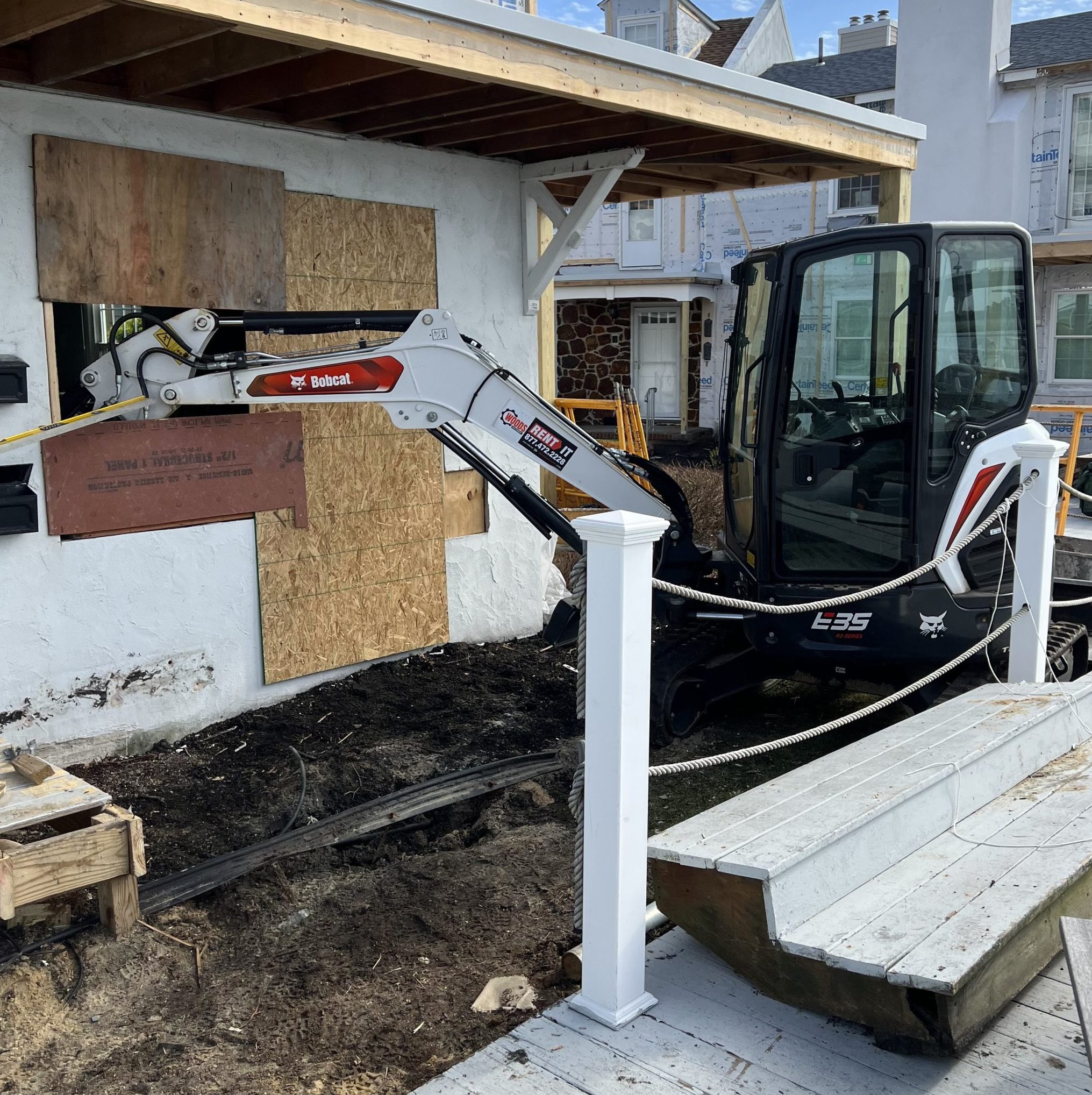
Helical piles are installed with compact hydraulic equipment. There is:
- No large excavation
- No concrete trucks
- Minimal site disturbance
- Faster installation time
This makes them ideal for tight-access properties and existing structures.
Precise Load Verification
During installation, torque readings are monitored to verify load capacity. This provides measurable data confirming the pile meets required structural design loads.
That level of verification isn’t possible with traditional shallow footings.
When Should You Consider Helical Piles?
Helical piles are especially beneficial when:
- Soil conditions are poor or unstable
- The project site is in a flood zone
- Existing foundations are settling
- Access is limited
- You need immediate load-bearing capacity
- Traditional footings are not practical
If your project requires deep foundation support, helical piles are often the safest and most efficient solution.
Build on a Stronger Foundation
Every structure depends on what’s beneath it. Helical piles provide a dependable, engineered foundation system that protects your investment for decades to come. If you’re planning new construction, repairing structural settlement, or preparing for elevation work, helical piles may be the right solution for your project.